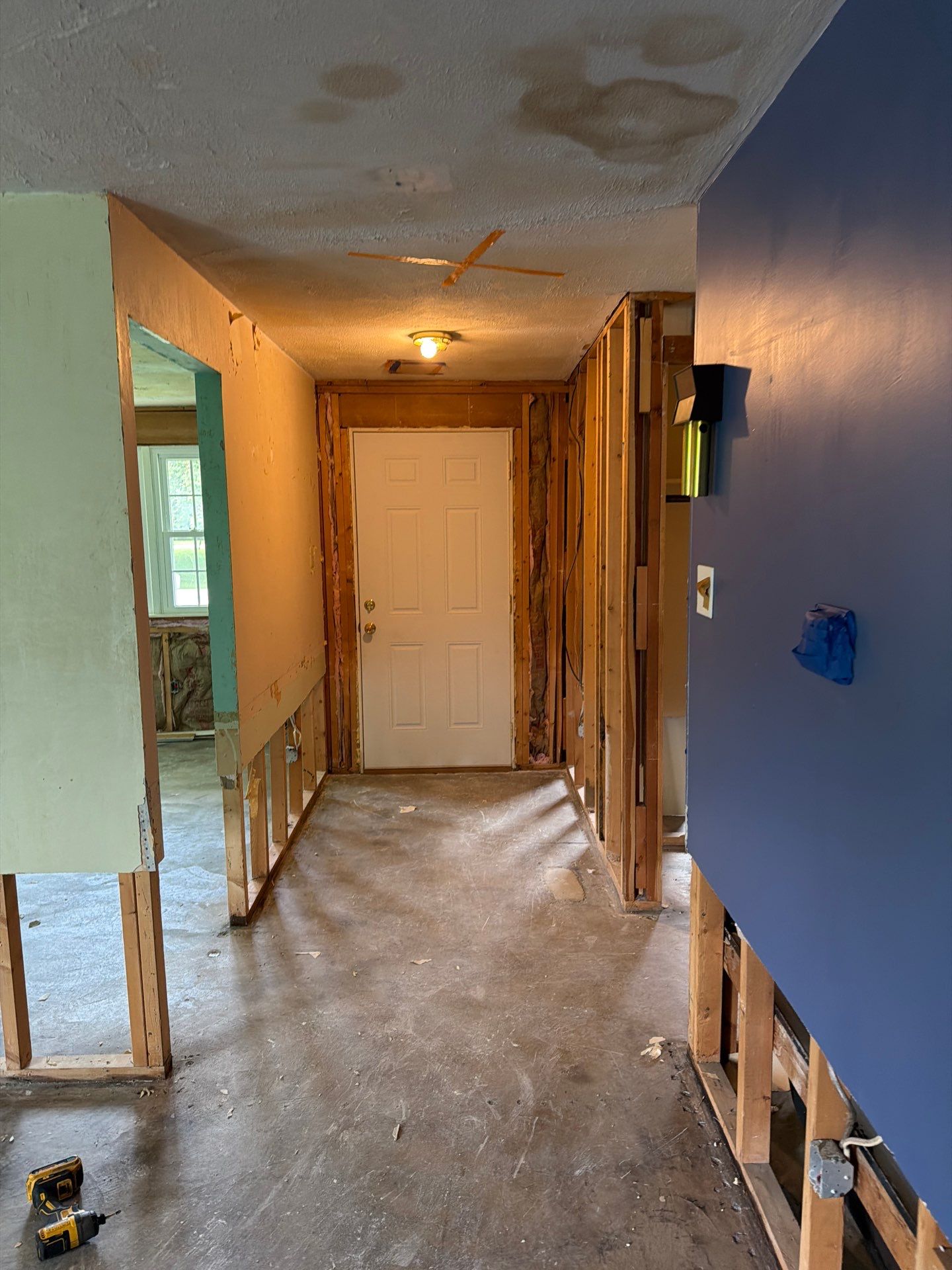
Problem: You Do Not Know If Your Damage Is Even Covered
Most Rocky Ripple homeowners assume any water in the house is covered. That is not how policies work. Standard HO-3 policies in Indiana typically cover sudden and accidental discharge, like a burst pipe at 2am or a washing machine hose that lets go. They almost never cover gradual leaks, surface flooding from heavy rain, or sewer backup unless you have a specific endorsement.
Solution: Identify the Source Before You Call
Look at where the water came from. A pipe inside a wall, a supply line behind the toilet, or a water heater that ruptured are usually covered. Groundwater pushing through a basement wall after a storm is usually not, unless you have flood insurance through NFIP. Sewage coming up through a floor drain needs a sewer backup rider. We break down the gray areas in our guide to what homeowners insurance covers for water damage, and we suggest reading it before you make the call.
Pull out your declarations page and look for the exact endorsements listed. If you see "water backup and sump overflow" you have sewer coverage, usually capped between $5,000 and $25,000. If you do not see "flood" anywhere, you do not have flood coverage, and no amount of arguing will change that after the loss. Knowing what is on your policy before the call lets you frame the loss correctly the first time.
Problem: You Are Worried About Calling Insurance Too Early or Too Late
Homeowners freeze here. Call too early without facts, and you sound disorganized. Wait too long, and the carrier argues you failed your duty to mitigate, which is grounds for denial.
Solution: Document First, Then Call Within 24 Hours
Before you dial, do these three things in order:
- Stop the water at the source. Shut off the main valve, kill power to wet rooms, and move salvageable items to dry ground.
- Photograph and video everything. Get wide shots of each room, close ups of damaged materials, the source of the leak, and any standing water with a ruler or shoe for scale.
- Write down a timeline. When did you notice it, what did you do, and who did you call.
Then call your carrier and report it. Get a claim number in writing. Ask for your adjuster's name, direct line, and email. Ask what your policy requires for emergency mitigation authorization.
Problem: The Adjuster Has Not Shown Up and Water Is Still Spreading
This is the most common panic call we get in Rocky Ripple. Homeowners think they have to wait for the adjuster before anyone touches the property. That waiting period is exactly how a Category 1 clean water loss becomes a Category 2 or 3 contamination event with mold inside 48 hours.
Solution: Start Mitigation Immediately, You Are Required To
Every standard policy contains a clause requiring you to prevent further damage. That means you call a licensed restoration company to extract water, set drying equipment, and stabilize the structure right now. The adjuster will inspect later. Rocky Ripple Water Restoration provides written scopes and moisture documentation that match insurance formatting, which keeps your claim clean. For a deeper look at the timeline, read our breakdown of how long water damage takes to dry professionally.
Keep every receipt for tarps, fans, hotel stays, and any out of pocket spend. Loss of use coverage reimburses these costs, but only with proof. Save text messages with your adjuster too, because verbal approvals get forgotten when a file changes hands.
Problem: You Are Not Sure What Counts as Mitigation vs Restoration
Carriers split payouts into mitigation (emergency stabilization) and restoration (rebuild). Mixing these up on your claim creates delays.
Solution: Understand the Two Phases
- Mitigation: water extraction, drying, antimicrobial treatment, removal of unsalvageable materials. This is billed under emergency services and often paid faster.
- Restoration: drywall replacement, flooring, paint, cabinetry, final repairs. This is billed separately and requires its own approval.
Our team handles both, but we invoice them separately so your adjuster can process each phase without confusion. The full difference is covered in our article on water damage versus water mitigation.
Problem: Your Claim Was Denied and You Do Not Know What to Do
Denials happen. The reasons usually fall into three buckets: gradual damage exclusion, lack of documentation, or policy exclusion the homeowner did not know existed.
Solution: Request the Denial in Writing and Appeal
Ask the carrier to send the denial reason in writing with the specific policy language they relied on. Review your policy declarations page. If the denial is wrong, you can appeal with additional documentation, file a complaint with the Indiana Department of Insurance, or consult a public adjuster or attorney who handles first party claims.
You generally have one to three years under Indiana law to dispute a denied claim, but the sooner you act, the better your evidence holds up. Keep the wet materials we remove bagged and labeled if possible, because physical samples often reverse a denial when photos alone are not enough.
Problem: The Adjuster Lowballed Your Estimate
Carriers issue an initial estimate that often misses hidden damage behind walls, under flooring, and in subfloor cavities. We see estimates come in at $3,000 when the real scope is $11,000 or more.
Solution: Get a Counter-Estimate From a Licensed Restoration Contractor
You have the right to a second opinion. A certified restoration company uses moisture meters, thermal imaging, and IICRC S500 standards to document actual damage. We submit a detailed scope with line items the adjuster can verify. Most of the time, the carrier adjusts the settlement upward once they see real data. If they refuse, you can request a reinspection, hire a public adjuster, or invoke the appraisal clause in your policy.
Hidden damage is where most claims get shorted. Wet insulation behind a wall cavity reads dry on the surface but holds moisture for weeks. Engineered hardwood looks fine on day three then cups on day ten. A thorough counter estimate flags these areas with photos, meter readings, and a notation about probable secondary damage, which protects you from supplemental denials later.