The Westside Backup That Taught Us About Speed
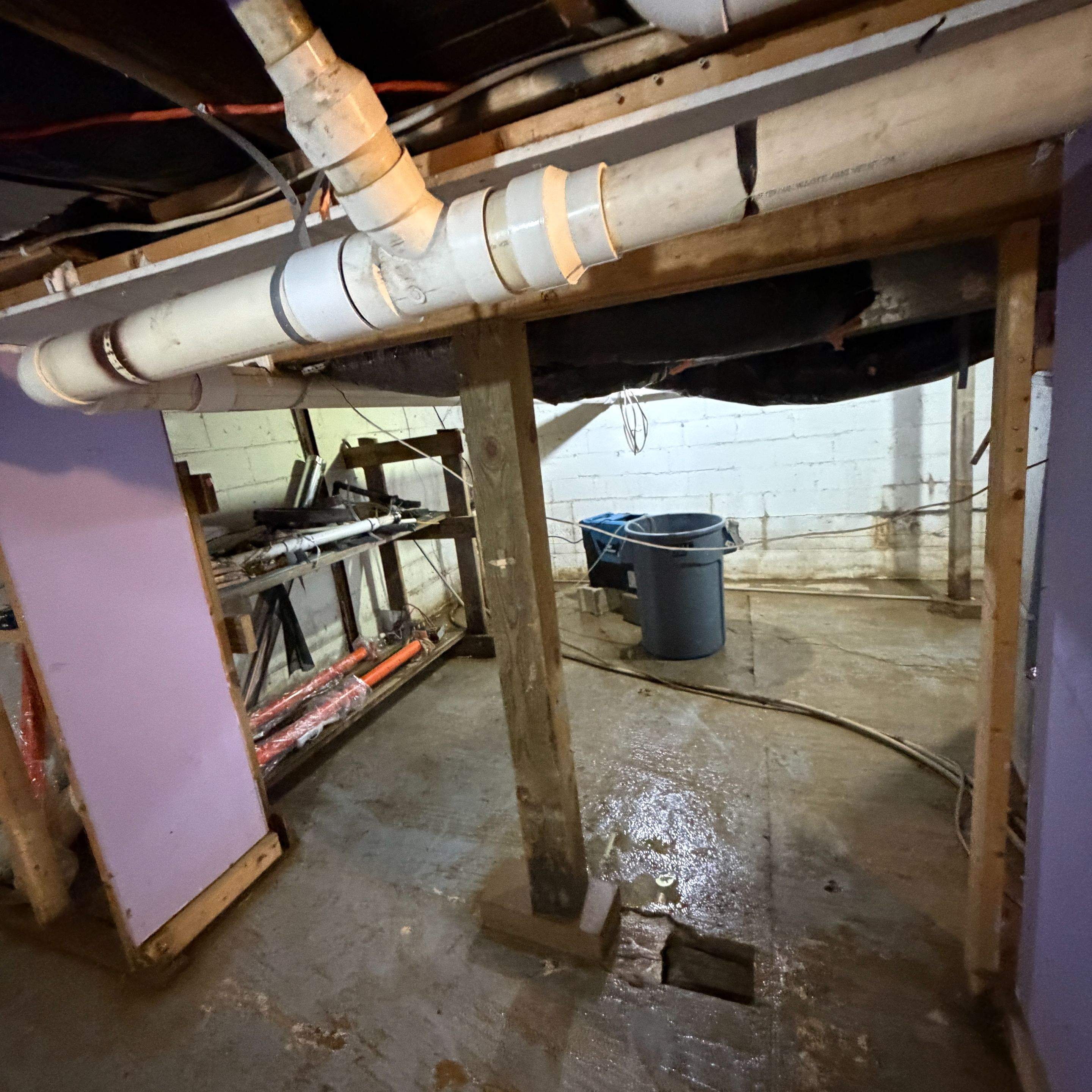
One Rocky Ripple homeowner called us when her downstairs toilet started overflowing and would not stop, even with the supply valve closed. That is a classic sign the blockage is downstream in the main line, not in the fixture itself. By the time we arrived, roughly 90 gallons of contaminated water had spread through a hallway, a guest bathroom, and into the edge of the living room carpet. Our crew set up containment barriers within 20 minutes, extracted standing water with truck-mounted equipment, and began removing affected carpet pad. Total demolition that night: 180 square feet of pad, 22 linear feet of baseboard, and the bottom 18 inches of drywall across three walls. The homeowner kept asking if we really needed to cut that much. The honest answer was yes, because Category 3 water saturates gypsum and cellulose within an hour, and you cannot dry contamination out. You remove it.
What surprised her more than the demolition was the air scrubbing phase. We staged two HEPA units in the affected zone for 72 hours, monitored airborne particulate, and ran an antimicrobial fog after the structural drying hit equilibrium. She had assumed the job ended when the water was gone. In reality, the water removal is maybe 30 percent of the work. The other 70 percent is decontamination, drying validation, and clearance testing before any rebuild begins.
Why Black Water Is Different From a Burst Pipe
A burst supply line is clean water, Category 1. You can often dry materials in place. Black water is different. It contains fecal matter, raw sewage, and a mix of bacteria like E. coli and hepatitis pathogens. The IICRC S500 standard requires that porous materials touched by Category 3 water be removed and disposed of, not dried. That includes carpet, pad, insulation, particleboard, and most drywall. Hardwood and tile can sometimes be saved if cleaned and sanitized within the first 24 hours, but the subfloor underneath often cannot. We covered the deeper mechanics of this in our breakdown of sewage backup cleanup and safe removal, which is worth bookmarking before you ever need it.
Real Cost Ranges From Recent Rocky Ripple Jobs
People always want a number. Based on jobs we have completed across central Indiana in the last 18 months, a contained Category 3 loss in a single bathroom typically runs $2,800 to $4,500. A partially finished basement runs $6,500 to $12,000. A fully finished basement with cabinetry and flooring runs $14,000 to $28,000. Commercial losses vary widely. These ranges assume reasonable access, no structural damage, and standard antimicrobial protocols. They do not include rebuild costs after the mitigation phase, which is a separate scope handled by a general contractor or our reconstruction division.
The Finished Basement Job That Ran Insurance Through the Wringer
Another Rocky Ripple family called after a city sewer backup pushed roughly 400 gallons of black water into their finished basement during a heavy April rain. The damage included a home office, a carpeted family room, and a wet bar with custom cabinetry. The homeowner had a standard policy, which did not cover sewer backup without a specific rider. He had added a $10,000 sewer backup endorsement three years earlier on the advice of his agent, and that decision saved his finances. Our crew documented every affected material with photos, moisture readings, and a written scope tied directly to IICRC categories. The total project came in at $14,200. Insurance paid $9,800 after the $500 deductible and the rider cap. The family covered the remaining $3,900 out of pocket, which still beat the $40,000-plus replacement cost of the entire basement finish.
A few things from that job that apply to any black water loss:
- Photograph everything before you touch it, including the water line on the wall and any visible contamination.
- Call your insurance carrier before authorizing demolition, but do not wait more than a few hours.
- Ask your restoration contractor for a written IICRC-aligned scope, not a verbal estimate.
- Save receipts for hotel stays, meals out, and pet boarding if the loss makes your home uninhabitable.
The Rental Property Where Delay Cost Triple
A landlord in Rocky Ripple called us five days after a tenant reported a slow sewer backup in a duplex laundry room. The tenant had been mopping it up with towels and tossing them in the washer. By the time we arrived, contamination had wicked up the drywall to 36 inches, the laminate flooring had cupped and separated, and mold colonies were visible on the back of the baseboards. What should have been a $3,200 job became an $11,500 job because the delay allowed secondary damage. The lesson we share with every property manager we work with is simple. If the water is gray or black, the clock started the moment it appeared, not the moment you decided to act.
What the First 30 Minutes Should Look Like
A Rocky Ripple restaurant owner once called us at 6 a.m. after a kitchen drain line backed up overnight. He had already walked through the standing water in regular shoes, mopped some of it with a kitchen mop, and was preparing to open for breakfast. We stopped him on the phone. Black water requires that you keep people out of the affected area, shut down HVAC to prevent cross contamination, turn off electricity to wet zones at the breaker if you can do so safely, and avoid tracking contamination into clean parts of the building. For commercial properties, we also coordinate with health departments when needed through our commercial sewage cleanup team. He closed for two days, lost about $4,800 in revenue, and reopened with a clean health inspection. The alternative, opening that morning, could have shut him down for weeks.
The Crawl Space Surprise in a 1960s Ranch
Not every black water job announces itself with a flood. A Rocky Ripple homeowner called Rocky Ripple Water Restoration about a smell she could not identify, something sour and sharp that got worse on humid days. We pulled the crawl space hatch and found three inches of standing sewage from a cracked cast iron drain line that had been leaking for weeks. The vapor barrier had trapped the contamination and the smell, while bacteria colonized the joists overhead. That job required full PPE, encapsulated removal of the vapor barrier, antimicrobial treatment of the framing, and coordination with a plumber for the line repair. If you suspect something similar, our guide on crawl space water damage removal and drying covers the warning signs in detail.